- Video service monitoring
- Video mobile automation
- Smart TV automation
Short-form video QoE monitoring across devices
By Christophe Vié, Enterprise Account Executive, US West Coast12 min read
Short-form video QoE monitoring is the practice of continuously validating short-form playback (vertical clips, swipe feeds, micro-sessions) across the real consumer devices viewers actually use. It measures the KPIs that determine whether short-form content delivers the experience viewers expect: time to first video in the feed, ad load duration, feed scroll performance, and video quality across rapid transitions. Done well, it catches failures before viewers do, on real Android phones, iPhones, Smart TVs, set-top boxes, and connected streaming devices, not in simulation.
For a long time, short-form video was a phone phenomenon. Vertical clips, swipe-driven feeds, content engineered for a single device held close to the face.
That’s no longer the case. Short-form now appears inside FAST channels, sports apps, news verticals, music services, and connected-TV experiences. Vertical clips render on horizontal screens. Swipe gestures translate to remote-control inputs. The same playback stack that handles two-hour movies now handles bursts of fifteen-second sessions in rapid succession.
According to Comscore’s 2025 State of Streaming Report, connected TV reached 96.4 million US households in 2025, with FAST-channel viewing up 43% year-over-year. eMarketer reports CTV will capture 30% of US digital media time in 2025. And while 81% of consumers primarily watch short-form vertical on phones, the remaining ~19% are now watching it elsewhere, on connected screens that were never designed for vertical playback.
For QoE, engineering, and operations leaders, this shift creates a new class of failure modes, and the monitoring stacks built around long-form streaming don’t catch them.
There’s a structural reason. QA and monitoring built for long-form OTT usually starts with Smart TVs and browsers and treats mobile as an add-on. Short-form runs the other way around: it’s mobile-first, with the TV as the fast-growing second surface. Testing it well means inverting that orientation, putting the phones viewers actually carry at the center.
This article walks through what changes with short-form QoE, why traditional video monitoring misses the new failures, what real-device testing should cover, and how it’s being done in production today.

What’s actually different about short-form video QoE?
Short-form is not just shorter long-form. Six characteristics change the QoE picture:
Vertical content on horizontal devices. Most short-form is shot 9:16. On a phone that’s natural. On a Smart TV or set-top box, the same content has to be letterboxed, pillarboxed, or cropped, and how that rendering happens depends on the player, the device, the OS, and the encoding ladder. Mistakes here are visible to viewers immediately.
Swipe-driven micro-sessions. Viewers move from one clip to the next in a fraction of a second. Startup time isn’t measured in seconds anymore, it’s measured in tens or hundreds of milliseconds. Akamai research shows that after a 2-second wait, 5.8% of viewers abandon for every additional second of delay. In a swipe feed, those thresholds get tighter.
Tighter ad cadence. Short-form means more session boundaries per hour, which means more ad opportunities, more SCTE-35 markers, more DRM session establishments, and more places for ad logic to misfire. Industry data shows FAST channels achieve only 20–40% ad fill rates against 75–85% benchmarks.
UGC variability. Some short-form catalogs include user-generated or partner-generated content with unpredictable encoding profiles, frame rates, and aspect ratios. Edge cases that never appeared in studio-controlled long-form catalogs become routine.
Captions and audio matter more. Around 85% of mobile video views happen on mute, rising to 92% on mobile specifically per Manchester Digital research. 80% of consumers are more likely to watch the full video when captions are available. Caption rendering, timing, and accuracy become QoE-critical, not optional.
Higher load on the connection lifecycle. Twenty short clips in five minutes means twenty manifest requests, twenty DRM handshakes, twenty player initializations. Anything fragile in that path now fails twenty times more often. And the same connection-lifecycle load amplifies network variance: a swipe feed that works on good wifi can collapse on degraded wifi, a busy 5G cell, or a cellular handoff.
Why does traditional video monitoring miss short-form failures?
Most QoE stacks were built around long-form viewing assumptions. That creates blind spots when short-form arrives.
KPIs are calibrated for long sessions. Startup time tolerances, rebuffer ratios, and bitrate adaptation thresholds were tuned for thirty-minute or two-hour sessions. A two-second startup is acceptable for a movie. In a swipe feed, it ends the session.
Aggregate metrics hide rendering edge cases. Average video start time across a million sessions can look healthy while a specific Smart TV firmware on a specific OS version letterboxes vertical content incorrectly, visible to every viewer on that device, invisible in the dashboard.
Synthetic monitoring often skips the new failure modes. Probes built for long-form tend to validate single-clip playback. They miss the swipe transition itself, the second clip in a row, the ad-to-content handoff at high cadence, exactly where short-form breaks.
Player telemetry reports what the player thinks happened. It doesn’t show what was on the screen. If captions were misaligned, if vertical content was cropped wrong, if the wrong fallback rendered after a transition, in-app analytics have no way to see it.
Automation breaks every time the UI moves. Short-form apps iterate UIs faster than long-form streaming services. Each release can break script-based test automation. Brittle test suites quietly degrade until coverage is mostly theatre.
The result is the familiar pattern: dashboards green, viewers frustrated.
What does effective short-form video QoE monitoring require?
Eight principles, drawn from monitoring deployments in production today:
Test on real devices, not in simulation. Vertical-to-horizontal rendering, transition smoothness, codec edge cases, and UI response issues all depend on the actual hardware and OS combination viewers use. Emulators and virtualized players don’t reproduce the rendering pipeline a real STB or Smart TV uses. Coverage has to extend across the same Smart TVs, set-top boxes, mobile devices, and browsers viewers actually use.
Capture visual proof, not just player telemetry. What’s on the screen is what determines viewer experience. Recording video evidence (frame-accurate, timestamped) alongside player metrics, is what lets a QoE team say with confidence whether the experience was correct.
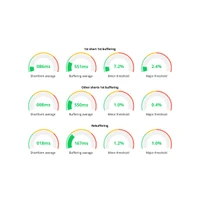
Measure short-form-specific KPIs. Time to first video displayed in the feed, ad load duration within short-form sessions, feed scroll performance, video quality score across rapid content transitions. These are different from the long-form KPI set.
Validate transitions, not just playback. The moment a viewer swipes to the next clip is its own quality event. Startup time, audio sync, caption appearance, and ad insertion logic all need to be tested at the transition boundary, not only at the start of a session.
Test under realistic network conditions. Validating only on good wifi hides failures that appear where viewers actually are: degraded wifi, busy 5G, cellular handoffs, and congested networks.
Use automation that survives UI change. Scripted-only automation can’t keep up with weekly UI iterations on short-form apps. Hybrid approaches, combining deterministic logic with agentic AI that adapts to interface shifts, are the practical answer.
Measure at scale, continuously. Short-form QoE issues often surface as low-percentage but persistent failures across specific device-OS combinations. They become visible only when testing runs continuously across a representative device matrix.
Watch the first-time-on-device experience. New devices, new firmware, new app versions are where short-form regressions tend to appear first. Treat each as a release event with its own validation cycle.
How is short-form video QoE being monitored in production today?
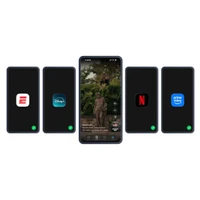
These principles aren’t theoretical. One of the world’s largest social media companies operating short-form and vertical video at global scale runs short-form QA and monitoring on Witbe’s platform, across mobile phones and Smart TVs, in continuous production.
The scale gives a useful picture of what running short-form monitoring at production weight actually looks like:

The KPIs measured continuously: time to first video displayed in the feed, ad load duration within short-form sessions, feed scroll performance, video quality score across rapid content transitions, and competitive benchmarking against other short-form platforms.
The KPI emphasis matters. In the customer’s own words, anonymized:
“The data surfaced two paths into the short-form feed in our app: through the bottom-bar shortcut, playback was instant; through the hamburger menu, the first video took two seconds to load. We traced it and fixed it. At our scale, two seconds of attention is billions of seconds of engagement.” (Senior engineering leader at the customer)
That is the engagement impact continuous real-device measurement exists to produce. A two-second delay in one navigation path, invisible to aggregate dashboards, recovered through device-level measurement.
What kinds of short-form failures get caught?
Over February through May 2026, the same deployment detected 12 to 20 new application failures per month, each logged with frame-accurate video evidence of the exact on-screen moment the failure occurred. Examples, all anonymized:
- A short-form feed taking 2.6 seconds to display its first video on a flagship handset
- An app exceeding its five-second target to open the video tab, with 5.7 seconds measured
- A splash screen taking more than 45 seconds on an HD streaming stick
- An app on a 4K streaming stick failing to open at all
- A missing send-confirmation when sharing a short-form video
None of these were detectable by network telemetry alone. All required video-anchored evidence captured on the device.
How does test automation keep up with short-form release cadence?
Short-form apps ship UI updates faster than long-form streaming services. Test maintenance becomes the rate-limiting factor for coverage. In the same production deployment, the migration from legacy script-based automation to Witbe’s Agentic SDK in Test Studio produced:
- 5 captures versus 22 for the same scenario: a more than 75% reduction in maintenance surface
- App Object grouping: correct a navigation step once and every scenario that uses it inherits the fix instantly, with no per-scenario code edits
- A UI change resolved in under five minutes (capture update only) instead of hours of code work
- A new scenario moved from development to production in three weeks. In the fastest case, a scenario was scripted in a day, validated over the next two, and collecting data across the weekend
- A sharing scenario estimated at six months under the legacy framework reached client validation in four weeks
- Zero datapoints lost during maintenance, because AI-assisted fallback continues data collection when an algorithmic step breaks
The broader platform benchmark presented by Witbe COO Yoann Hinard at the 2026 BEIT Conference: approximately 80% less test maintenance on Smart TVs in black-box conditions across UI changes.
Checklist: 8 questions for VSPs evaluating short-form QoE
If short-form is on your roadmap or already in production, eight questions are worth asking your monitoring stack:
- Can it test the same content across Smart TVs, set-top boxes, mobile devices, and browsers: not just one form factor?
- Does it capture visual evidence of what’s on screen, not just what the player API reports?
- Can it validate vertical content rendering on horizontal screens?
- Does it test the swipe-to-next transition itself, or only single-clip playback?
- Can it exercise the application under realistic network conditions (degraded wifi, busy 5G, cellular handoff), not only on a clean connection?
- Does it measure short-form-specific KPIs (time to first video, ad load duration, feed scroll) and not just long-form ones?
- Can it survive weekly UI changes without rewriting scenarios from scratch?
- Does it run continuously across releases and devices, or only on demand?
The more no answers, the larger the gap between what your dashboards show and what your viewers actually experience.
Frequently asked questions
What is short-form video QoE monitoring?
Short-form video QoE monitoring is the continuous validation of short-form playback quality (vertical clips, swipe feeds, micro-sessions) on the real consumer devices viewers use. It measures KPIs specific to short-form (time to first video, ad load duration, feed scroll performance, video quality across transitions) and captures visual evidence of what appears on screen, not just what the player API reports.
How is short-form video different from long-form for QoE testing?
Short-form has tighter startup-time tolerance (milliseconds instead of seconds), more session boundaries per hour, vertical-on-horizontal rendering complexity, higher mute-watching rates that elevate caption criticality, and a faster app-UI release cadence that breaks scripted test automation. Long-form QoE KPIs and probes don’t capture these differences.
Can short-form video be tested on Smart TVs and set-top boxes?
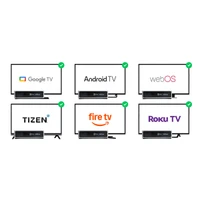
Yes. Real-device testing platforms validate short-form playback on Smart TVs (Samsung, TCL, Fire TV, etc.), connected streaming devices (Google TV Streamer, ONN 4K, Fire Stick), set-top boxes, mobile phones, and browsers, the same matrix where short-form content now lives.
Why doesn’t traditional QoS monitoring catch short-form issues?
Traditional QoS measures network and CDN signals, not what appears on the consumer device. Short-form failures often happen at the rendering, transition, or device-specific layer, visible only to a viewer looking at the screen. Network monitoring shows green while specific device-OS combinations are broken.
What’s the difference between player telemetry and real-device short-form testing?
Player telemetry reports what the player thinks happened. Real-device monitoring captures what was actually on the screen, with frame-accurate video evidence. The difference matters for short-form, where caption rendering, vertical-on-horizontal display, and transition smoothness are invisible to the player API.
How do you test vertical video on horizontal screens?
With real-device validation on the actual hardware viewers use, recording the on-screen output frame-by-frame. Letterbox, pillarbox, crop, and scaling decisions vary by device, OS, player, and content profile. The only reliable way to validate the rendering is to measure it on the same devices and configurations production uses.
From assumptions to proof
Short-form is no longer a phone problem. It’s a multi-device, multi-app, multi-format challenge that lives in the same environments your QoE team already covers. The assumptions that worked for long-form streaming don’t fully translate, and the gaps tend to be invisible until viewers report them.
Closing that gap means moving from assumptions to proof, from aggregate dashboards to real-device evidence, from scripted-only automation to hybrid systems that adapt, from sampling to continuous coverage.
If you’d like to see how Witbe tests and monitors short-form video on the real devices your viewers use, request a demo.
A feed carries ads as well as content. Ad experience monitoring covers the other half of the session: how often ads appear, who they come from, and whether they play cleanly.