- Video service monitoring
- Industry News
- Video mobile automation
Vertical video is now a standard streaming feature
By Christophe Vié, Enterprise Account Executive, US West Coast6 min read
In the space of a year, the vertical scroll feed stopped being a social-media feature and became a standard part of the streaming app. Netflix added Clips. Disney+ added Verts. ESPN added Verts. Prime Video expanded Clips beyond highlights. The format is the same one TikTok made familiar, and today it lives on the phone, inside premium streaming apps. The services have signaled the big screen is next. Either way, it changes what video teams need to test.
For most of its life, short-form vertical video was a phone story. A single app, a single orientation, a single way to watch.
That story is widening. Over 2025 and into 2026, the largest streaming and sports services each shipped their own swipe-driven vertical feed, built to drive discovery and daily engagement, running on infrastructure originally tuned for two-hour movies and live games.
Which streaming platforms have added vertical video feeds?
The list now covers most of the majors, and at launch, every one of these feeds is a mobile-app feature:
- Netflix: "Clips." A vertical, TikTok-style feed in the redesigned mobile app, launched broadly in April 2026. It's mobile-only by design; full titles still play in landscape on the TV. Netflix plans to extend Clips into podcasts, live programming, and curated collections.
- Disney+: "Verts." Launched on the mobile app in March 2026, letting users swipe through scenes from films and shows, add titles to a watchlist, or jump into playback. Disney has said it intends to evolve the experience and could extend it to connected TV over time, but at launch it is mobile-only.
- ESPN: "Verts." Live since 2025 as a personalized vertical sports feed inside the ESPN mobile app.
- Prime Video: "Clips." Expanded from NBA highlights to scenes from movies and TV series, in-app.
Different names, one pattern: the vertical feed is becoming a default surface inside premium video, starting on the phone.

Are these vertical feeds on smart TVs, or just phones?
Today, just phones. Netflix Clips, Disney+ Verts, ESPN Verts, and Prime Clips are all mobile-app features, and none plays its vertical feed on a TV at launch. Disney has been the most explicit that connected TV could come later.
But vertical video is already arriving on the big screen through a different door:
- YouTube Shorts on the TV. Vertical Shorts now surface directly on the Google TV home screen, beside films and channels: no app launch required.
- Social apps on the TV. TikTok and Instagram apps have been reworked to fill the big screen on smart TVs.
- Vertical-first hardware. Samsung's rotating Sero and Tizen Portrait Mode are built around upright content.
So the honest picture is: streaming's vertical feeds are a phone story now, and vertical content is becoming a TV story in parallel, with the streamers signaling they'll meet it there.
Why are streaming services adding short-form feeds?
The motive is engagement. A scroll feed gives a service a reason to be opened daily, not just on movie night, and turns the back catalog into discovery fuel. Disney has been explicit about wanting Disney+ to become a daily destination rather than an occasional one.
It's a sound strategy. It also asks the playback stack to do something new.
What the shift changes for video teams
A vertical feed inside a streaming app brings together several things long-form delivery rarely had to handle at once, and most of it lands on mobile first:
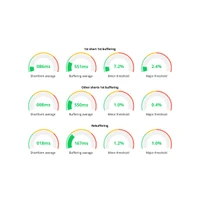
Startup tolerance tightens. In a swipe feed, a viewer reaches the next clip in a fraction of a second. The two-second startup that's comfortable for a movie behaves very differently in a feed. The thresholds calibrated for long-form no longer map neatly onto short-form.
More session boundaries, more ad opportunities. Twenty clips in five minutes means twenty manifest requests, twenty player initializations, and far more ad-insertion events than a single long title, more moments where the experience has to hold together.
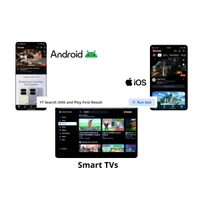
A wider device matrix, even on mobile. A feed has to behave across the full range of Android and iOS phones viewers actually carry, different screen sizes, OS versions, and players.
The UI keeps moving. These feeds are new and iterating quickly. Each release can shift the interface that test automation depends on.
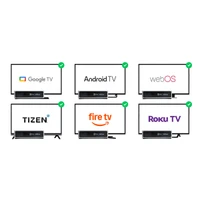
And the big screen is coming. As vertical content lands on connected TVs, and as streamers move their feeds toward CTV, the same content has to render correctly on screens it was never shaped for. That's a rendering question that only shows up on the device.
There's a structural wrinkle underneath all of this. Most QA and monitoring built for long-form streaming starts with Smart TVs and browsers and treats mobile as an add-on. Short-form runs the other way around: it's mobile-first, with the TV as the fast-growing second surface. Testing it well means inverting the usual orientation, putting the phones viewers actually carry at the center rather than the edge.
Much of this lives outside the usual view. Network and CDN dashboards can read healthy while a vertical feed stalls on the second swipe, or a caption lands off-frame, because that behavior is on the screen, not in the network signal.

What this means for video service providers
If you operate a streaming service, the vertical feed is shifting from a competitor's feature to a line on your own roadmap. The teams shipping these feeds first are finding that short-form quality behaves differently from the long-form experience they already measure, and that the dependable way to confirm it is on the real devices viewers use, with visual evidence of what actually rendered.
That's the throughline across this series: short-form looks like a small addition to the app, and behaves like its own area of testing.
- For the full picture, start with the primer: monitoring short-form and vertical video across devices.
- For where vertical is heading on the big screen, see vertical video on connected TV.
Frequently asked questions
Which streaming platforms have vertical video feeds?
As of 2026, Netflix (Clips), Disney+ (Verts), ESPN (Verts), and Prime Video (Clips) all run swipe-style vertical feeds inside their mobile apps. More services are expected to follow.
Do streaming vertical feeds play on smart TVs or only on phones?
At launch, only on phones. Netflix Clips, Disney+ Verts, ESPN Verts, and Prime Clips are mobile-app features and don't play their vertical feeds on a TV. Separately, vertical content is reaching TVs through YouTube Shorts on the Google TV home screen, social apps reworked for the big screen, and vertical-capable hardware like Samsung's Sero. Disney has signaled it may bring Verts to connected TV over time.
Is a streaming vertical feed the same as social media short-form?
The format is similar, but the context is different. A streaming vertical feed runs on premium video infrastructure and is built to surface a service's own catalog, and as it moves toward the TV, it inherits rendering and playback behavior that phone-only social apps rarely face.
Why are streamers adding vertical video?
To drive daily engagement and content discovery. A scroll feed gives viewers a reason to open the app frequently and surfaces titles from the existing catalog.